

Introduction
"Storage tank" sounds like a simple term. In the home goods and housewares trade, it rarely is. Depending on the market, the same word can mean a kitchen canister, a warehouse handling crate, a fridge organizer, or an industrial container-and the difference decides which factory, which resin, and which price bracket you should be quoting.
The confusion costs buyers real money. A purchasing brief written for "storage tanks" can return a catalog full of the wrong products, a listing can attract returns because the customer expected a different format, and a compliance file can be built around the wrong material family.
This guide resets the definition, maps the categories buyers actually order, and turns that map into a practical sourcing checklist. Use it to write tighter RFQs, compare supplier quotations fairly, and choose a product family that fits your market instead of your supplier's catalog.

What a Storage Tank Actually Is
A storage container-also called an organizer, storage box, or organizing box-is a container used primarily to hold, store, and organize items so that space is used efficiently and goods are managed in an orderly way.
That definition has three parts, and each one matters commercially:
It holds items. The primary function is containment, not transport or display, although many designs serve all three.
It stores them. Storage implies repeated, often long-term use-which is why material durability and stackability matter more than decorative detail.
It organizes. The product should make it easier to find, access, and put away items. A box that merely hides clutter fails the definition.
For B2B buyers, the practical takeaway is simple: a product only belongs in the "storage" category if it improves spatial efficiency. If it doesn't stack, nest, or sort, it is probably a different category-and should be sourced from a different production line.
Category One: By Use and Scenario
The first split buyers should make is by where the product will be used.
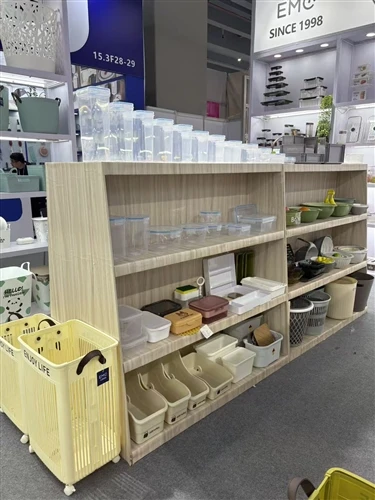
Household storage. Ordinary boxes for documents, clothing, toys, and general home organization. High volume, price-sensitive, and driven by neutral colours and stackable shapes.
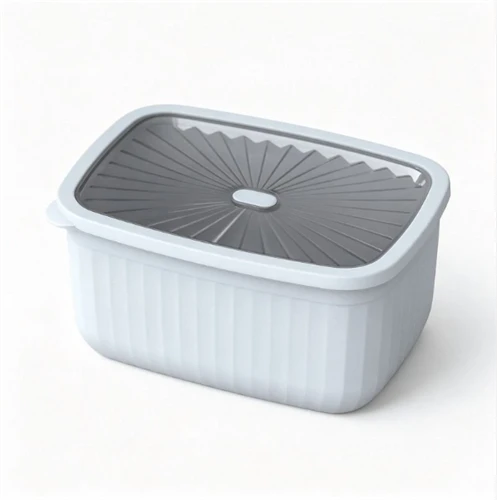
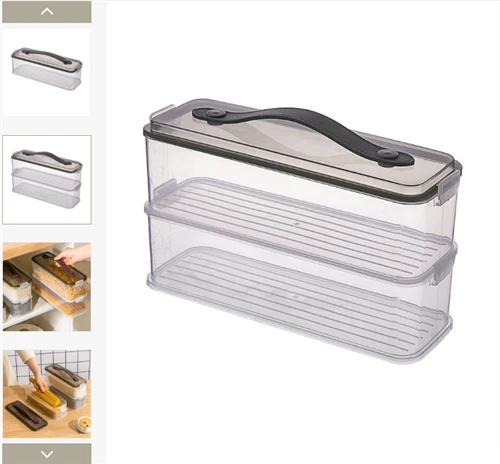
Kitchen and refrigerator storage. Specialized boxes for fruits, vegetables, dry goods, and chilled food. Here the requirements shift to food-safe materials, sealed lids, visibility, and resistance to moisture and odour transfer.
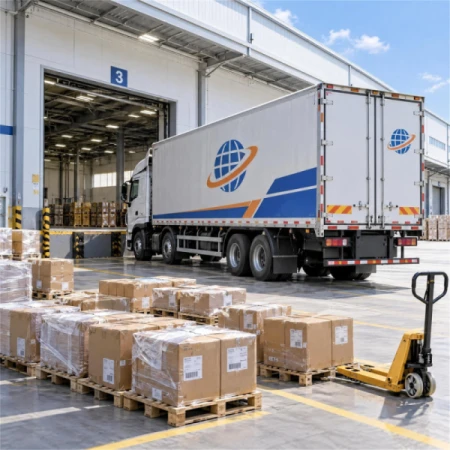
Commercial and warehouse storage. Handling boxes, bins, and totes used in logistics and industrial environments. These demand structural strength, load ratings, compatibility with shelving and handling equipment, and resistance to impact.
Specialized functional boxes. Insulated boxes for temperature-sensitive goods, toolboxes, car storage boxes, and similar products built around one specific job. Lower volume, higher specification, and usually a higher margin.
Most sourcing errors happen between the first two groups. A kitchen buyer who accepts a general household box without checking food-contact compliance is holding a product that cannot legally be sold as food storage in many markets.


Category Two: By Structure
The second split is structural-and it decides both freight cost and product life.
One-piece molded boxes. Injection-molded in a single piece, typically rigid, stackable, and dimensionally stable. Best for products that must hold shape under load, such as pantry bins and handling crates. Tooling cost is higher per SKU, but unit cost falls sharply at volume.
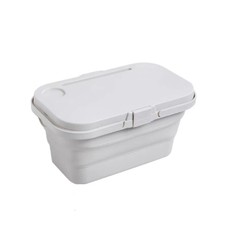
Modular and collapsible boxes. Designed to be assembled, disassembled, or folded flat. Best for space-sensitive channels: e-commerce, small apartments, and cross-border shipping, where volumetric weight dominates landed cost. The trade-off is more components and more assembly steps for the end user.
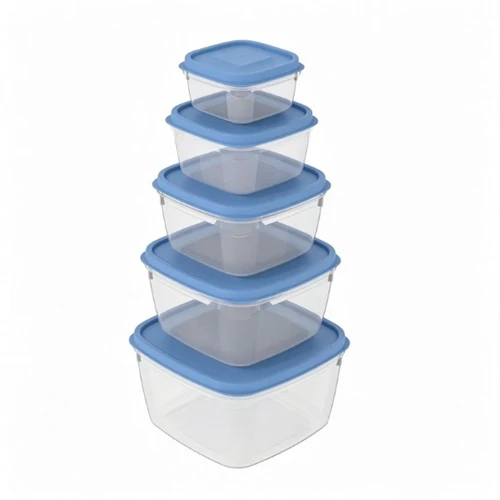
Nested sets. Containers sized to fit inside one another, reducing the empty set to a single footprint. A strong middle ground for food storage sets, combining rigid structure with shipping efficiency.
Category Three: By Material and Process
Material choice is the most technical part of the definition-and the part most often glossed over in supplier quotations.
PP (polypropylene). The default for food-safe rigid storage. Heat-tolerant, shatter-resistant, lightweight, and chemically stable. Look for virgin, BPA-Free food-grade resin.
PE (polyethylene). Softer and more flexible. Often rotomolded into thick, durable bins, and widely used for lids because it flexes into a reliable seal.
ABS. A tougher, more impact-resistant engineering plastic used where structural rigidity matters. Usually a step up in cost.
Recycled resins (rPP / rPET). Increasingly specified for sustainability programs. Ask for certification and confirm consistency of colour and mechanical properties across batches.
Non-plastic and composite options. Fabric, metal, and wood composites serve different aesthetics and load requirements, but bring different compliance, moisture, and freight considerations.
Special processes also belong in the definition: UV-stabilized additives for outdoor use, toughness-enhanced formulations for cold-chain handling, and modular designs engineered for easy assembly and disassembly. When a supplier says "PP storage box," ask which formulation, which grade, and which test standard.


A Sourcing Checklist for Storage Containers
Define the scenario first. Household, kitchen, fridge, warehouse, or specialized-each has different compliance and structural needs.
Define the structure. One-piece, modular, collapsible, or nested? The answer decides tooling, freight, and end-user experience.
Define the resin. Specify food-safe and BPA-Free where food is involved; request the grade and any FDA / LFGB documentation.
Check the seal. For food storage, the lid design and sealing edge are the product. Test leak resistance on the largest size in a set.
Check dimensional accuracy. Storage products live or die on fit. Ask about measurement tolerance and whether dimensions are metric-first or inch-converted.
Check stacking and nesting height. The collapsed or nested dimension is what drives your warehouse and freight cost, not the individual box.
Check customization scope. Logo printing, Pantone colour matching, size adjustment, and retail packaging should be confirmed before tooling begins.
Check capacity and lead time. Seasonal demand for storage products is predictable. Confirm production slots and sample lead times in writing.
Why the Definition Pays Off at Shelf
A clear definition makes a range easier to shop. When a buyer can articulate scenario, structure, and material in one sentence, suppliers can quote the same product-and comparisons become meaningful.
It also makes a range easier to sell. Retail shoppers don't search for "polypropylene nested modular storage solutions." They search for "rice container," "fridge organizer," or "under-sink boxes." The best-selling ranges are built from the definition the customer already uses, with the technical choices made behind the scenes.

Final Thoughts
"Storage tank" is a broad word, but it becomes useful the moment you narrow it: what it holds, where it lives, how it is built, and what it is made from. Get those four answers right in your RFQ and you will spend less time comparing incompatible quotes-and more time building a range that actually sells.
Cheerhope has manufactured household storage products since 1998, covering kitchen, fridge, pantry, and general home organization across a portfolio of more than 1,000 products. Contact us for category guidance, samples, and factory-direct pricing.
Note: This is sponsored content. Product availability and specifications are subject to the official listing.